

The Journey of Becoming a Yoga Teacher
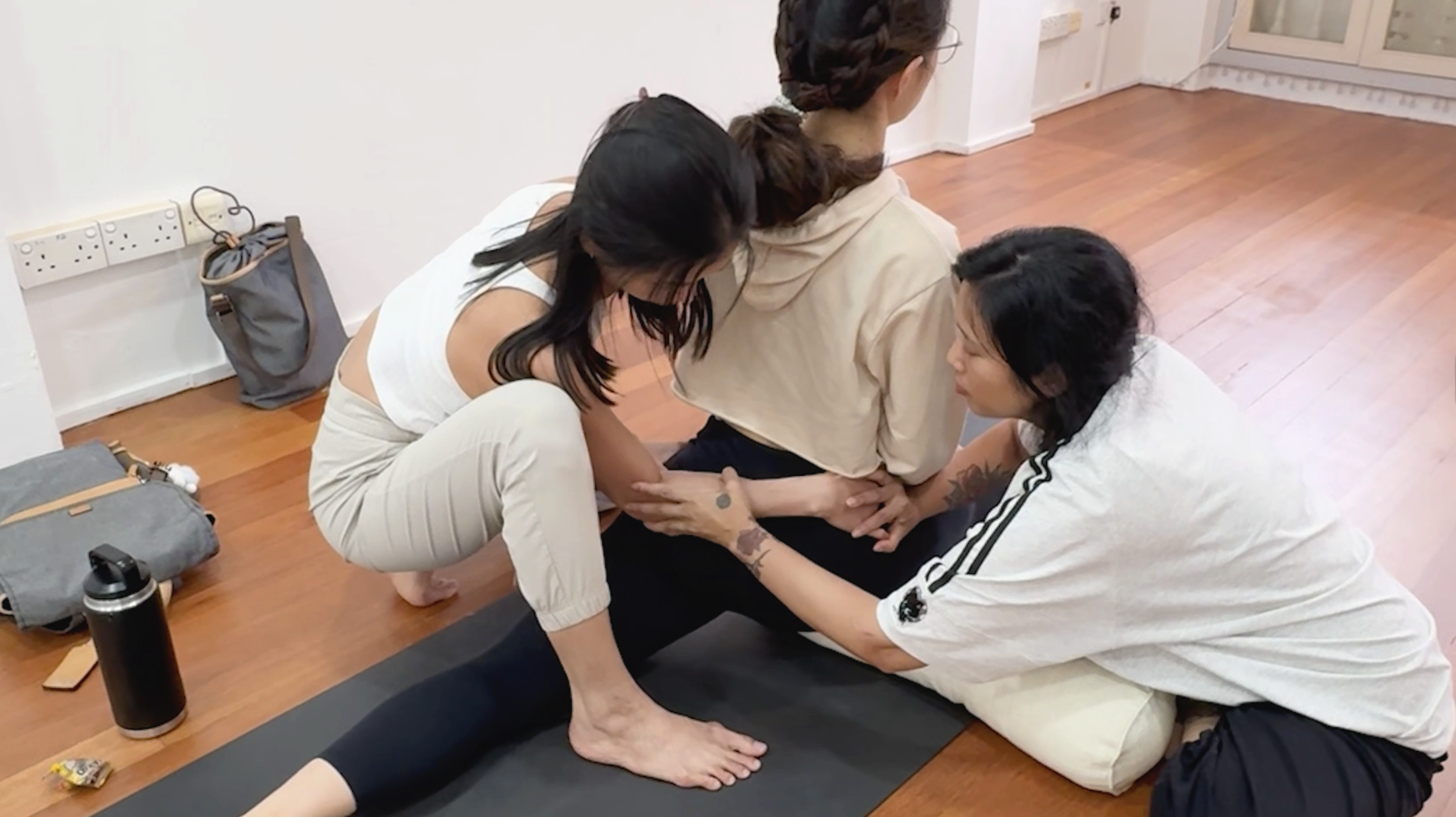
Learning, Practice, and Sharing Yoga
A 200-hour yoga teacher training is often the first step in the journey of becoming a yoga teacher. For many aspiring instructors, it provides the foundation needed to begin teaching yoga with confidence, clarity, and integrity. But while a 200-hour certification is an essential starting point, the path of yoga teaching is ultimately one of lifelong learning. Growth as a yoga teacher does not end with graduation. It continues through practice, study, teaching experience, and personal transformation.
Unlike many professional qualifications, yoga teacher certification does not instantly create mastery. Yoga teachers are developed over time. Teaching is, in many ways, a natural human capacity: we learn through experience, and we pass that wisdom on to others. Yoga teacher training deepens and refines this instinct through disciplined practice, philosophical inquiry, and embodied understanding.
Yoga is often described as an immense ocean of knowledge, and rightly so. It contains layers of philosophy, practice, self-study, and inner transformation. Yet at the same time, yoga is deeply simple. Like breathing, its wisdom becomes most powerful when lived consistently. Over time, the teachings of yoga become more than theory. They become practical tools for everyday life, helping practitioners cultivate presence, resilience, and balance.
A 200-hour yoga teacher training course is therefore not the end goal, but the beginning of a meaningful and evolving path: one that supports both personal growth and the development of a grounded, knowledgeable, and compassionate yoga teacher.
Learning Through Lineage and Experience
For many teachers, this understanding develops through years of study, travel, and immersion in different traditions.
Sita Chia, founder of Mysore Breathing Room, represents this type of living lineage. Her journey in yoga has taken her across many countries, where she has taught and practised extensively. Over the years, she has conducted workshops, retreats, and teacher trainings in places such as India, Bali, Singapore, and Thailand, sharing the depth of traditional yoga while adapting it to modern practitioners.
Her background combines several traditions—including Hatha yoga, Iyengar methodology, and Ashtanga practice—and she continues her studies with senior teachers in Mysore, India. This commitment to continuous learning reflects an essential principle of yoga: a teacher must always remain a student.
Over the course of her career, Sita has led dozens of yoga teacher trainings and intensive courses, mentoring practitioners from diverse backgrounds and helping them develop their own teaching voices while maintaining respect for classical yoga principles.
The Balance of Static with Dynamic Practices
A well-rounded training course usually would have both static and dynamic practices which are related in some ways, but distinct in others. Strengths of each don’t come from comparing them directly (though of course, we’ll get to go through this, since we have to be basic, at least at first). Real insight can be drawn from learning both these manner of practices, insight gained by observing how you relate to the world. In otherwords, we will be first asking you to look into the mirror before looking at yourself directly without a mirror. If you feel this resonating with your intution but yet slighly baffled in your head, then you’ll probably be a yoga teacher, if not now, later, just not never. Either way, you’re on the right track.
Static Practice
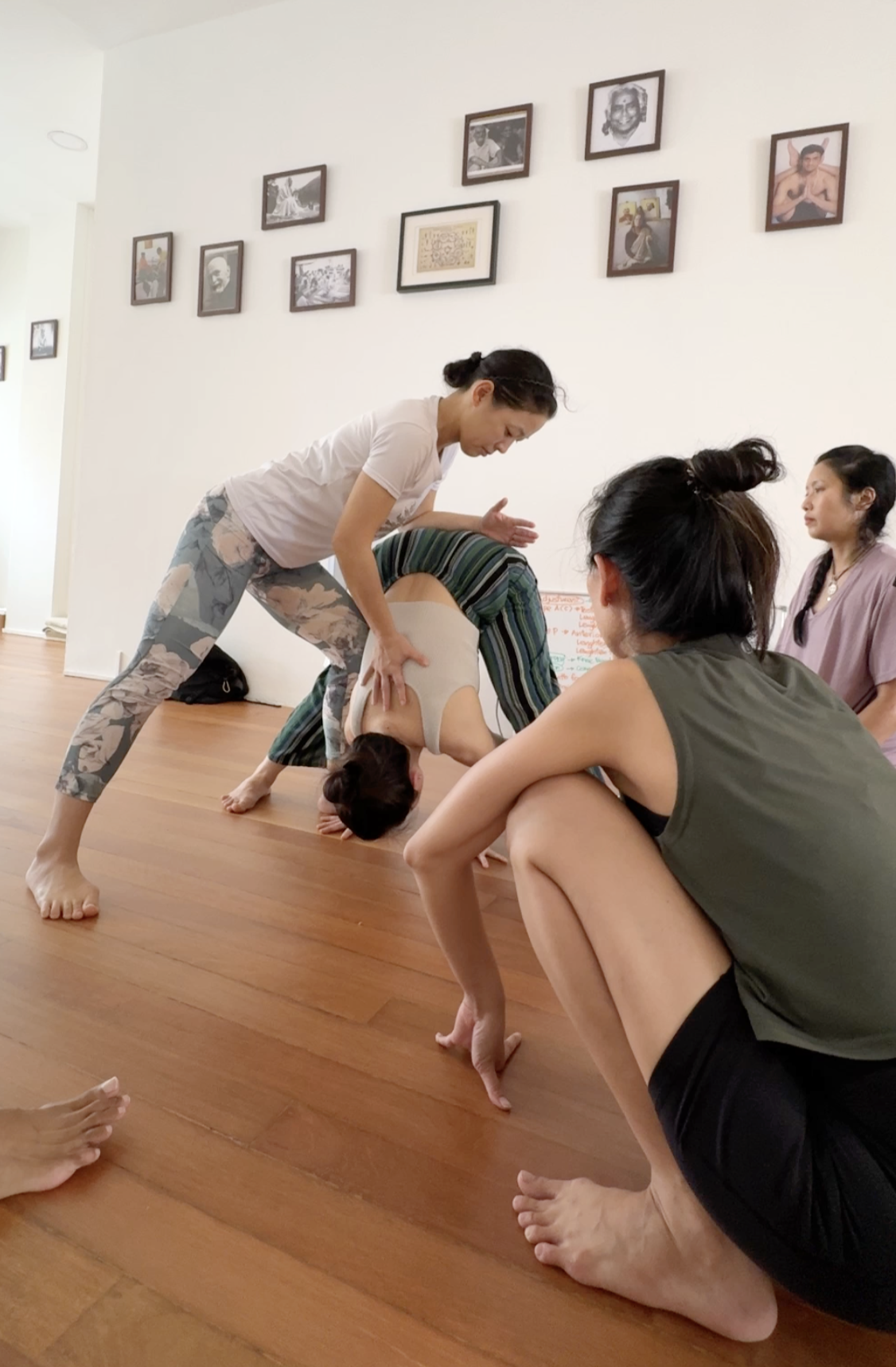
Static practices focuses on the depth of individual asanas. Although the postures appear still, they involve subtle internal actions. Muscles engage in opposing directions—one contracting while another lengthens—creating stability and balance within the body.
This study includes major categories such as:
Standing postures
Seated postures
Twists
Backbends
Inversions
Arm balances
Pranayama (breathwork)
Through careful attention to alignment, anatomy, and breath, practitioners develop a deeper understanding of the structure and intention of each posture. Traditions that teach yoga in this manner include the Sivananda method, as well as B.K.S. Iyengar schools.
Dynamic Practice
Dynamic practice integrates these postures into vinyasa, the linking of movement with breath. In this system, postures become like beads connected by a thread, forming a continuous flow of movement.
This approach allows teachers to structure classes that are rhythmic, intelligent, and responsive to the natural patterns of the human body. All, without exception, dynamic practices you see today have been derived from Pattabhi Jois’ ashtanga method.
Philosophy as the Foundation
Beyond the physical practice, yoga training emphasises philosophy and ethical living. Classical texts such as the Yoga Sutras of Patanjali, the Bhagavad Gita, and the Hatha Yoga Pradipika provide guidance not only for practice but also for everyday life.
These teachings remind practitioners that yoga is not merely physical exercise—it is a comprehensive system that integrates body, mind, and consciousness.
Teaching as a Lifelong Path
The path of teaching yoga is inseparable from the path of learning. Teachers refine their understanding of movement, breath, philosophy, and the human experience throughout their lives.
Through practice, study, and service, yoga teachers become conduits of knowledge—sharing a tradition that has evolved over centuries while remaining deeply relevant to modern life.
Ultimately, the true essence of yoga is not confined to the mat. It reveals itself in how we live, how we treat others, and how we contribute to the world around us.