

What yoga does for me …
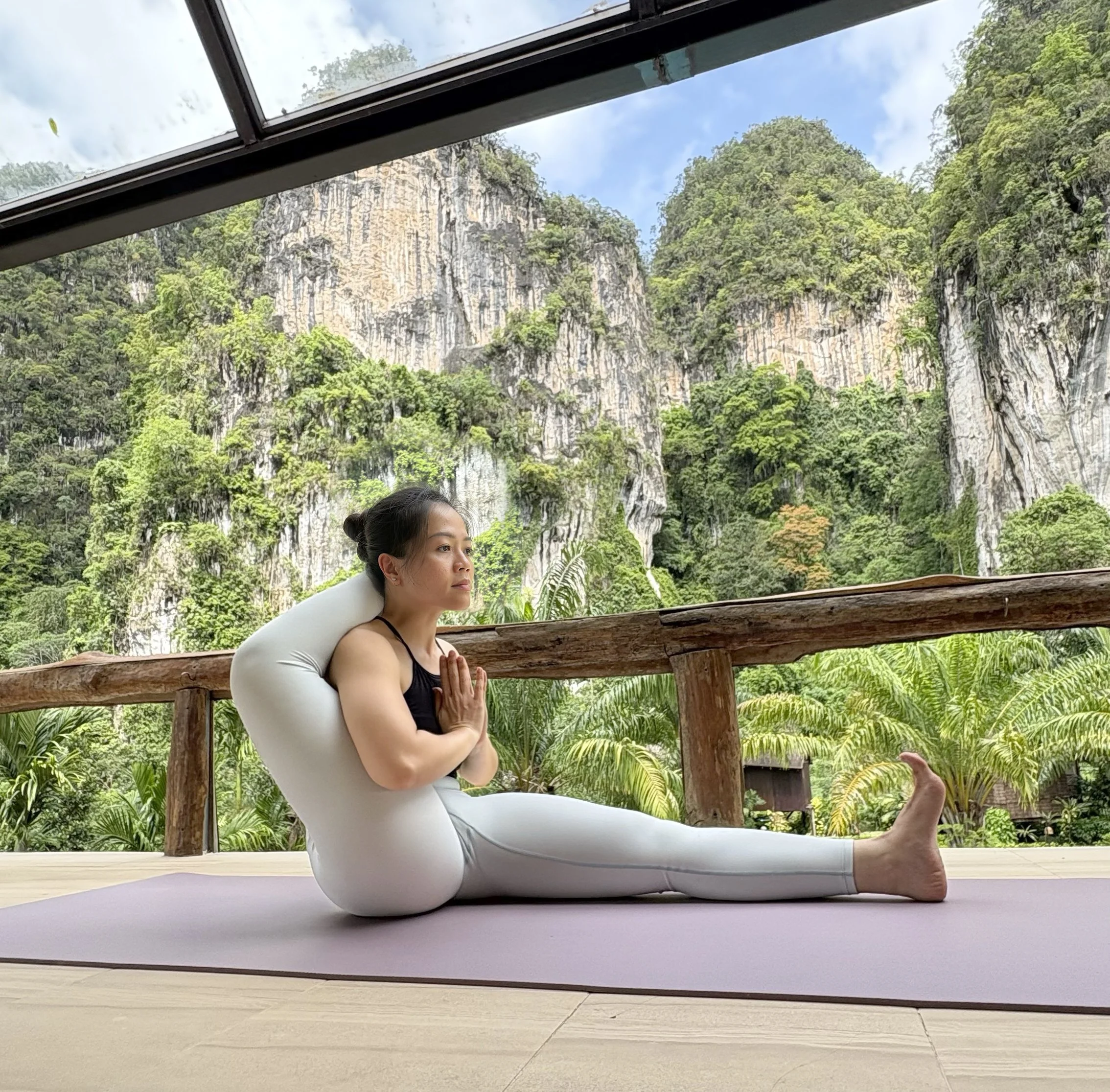
What yoga does for me … physically, mentally, spiritually
I first came to yoga through the body. At the beginning, my focus was simple and practical: to move, to stretch, to feel stronger and more flexible. With long working hours spent sitting in one spot, often in front of a screen, my body gradually felt stiff, tired, and disconnected. Yoga began as a physical solution—a way to counterbalance the effects of a sedentary routine. Yet, almost quietly, something deeper started to unfold. Through daily Ashtanga practice schedule, and later through my 200‑hour and 300‑hour yoga teacher training courses, my interest slowly expanded beyond physical postures into the wider structure of yoga as a whole.
One of the aspects I’ve grown to value most about yoga is the moment on the mat when I become fully responsible for myself—my body, my mind, my actions, and my emotions. After hours of external demands, this responsibility can feel both confronting and grounding. Yoga continually reflects my self‑limitations: my resistance to change, my fixed mindset, emotional blockages, and even my laziness. Facing these patterns is uncomfortable, and I am still very much working on them. At the same time, the challenge sparks a genuine curiosity in me—to see how consistent practice can slowly shift these habits and allow me to move beyond my own boundaries.
Physically, yoga has changed how I relate to my body, especially as someone who spends long hours sitting. I’ve become more aware of my posture, the way I move, how I breathe, how I sleep, and how I eat. I began noticing physical patterns shaped by my daily routine and learning how to respond rather than ignore them. Small lifestyle changes followed—waking up a little earlier, committing to almost daily asana practice during the week, and moving more consciously throughout the day. These changes not only improved my physical well-being, but also led me to deeper curiosity about food science, biology, neurology, psychology, astrology, human body anatomy, and yoga philosophy.
Mentally, the practice has helped me observe my thoughts and emotional patterns with more clarity. Work stress, habitual reactions, and internal resistance have become easier to notice. I’ve started exploring their root causes rather than reacting automatically. I don’t claim awareness at every moment—I am still observing and learning—but I now recognise when there is space to respond more consciously rather than react.
Spiritually, this remains the least defined aspect for me. I don’t feel I fully understand spirituality or its full picture. However, yoga has helped answer many questions I once held about existence, natural energy and the subtle systems that quietly shape life. While my approach to yoga is still largely physical, the practice connects deeply with my inner life.
Over time, yoga has become a steady push for me to step beyond my comfort zone—challenging my limitations, breaking repetitive patterns, and expanding many aspects of my life as a whole. Understanding myself better has also allowed me to better understand the people around me and the events that unfold in life more clearly, responding with clarity rather than reacting impulsively. The practice has shown me how capable I can be, if I learn how to apply effort with awareness. I find myself becoming less rigid and more spacious—both in obvious and subtle ways, much like the Ashtanga Mysore practice itself. Yoga has become an important and steady part of my life. I cherish the quiet moments alone on the mat with my breath, and I continue to explore how this consistent practice can gently transform me over time.
To me, yoga—more specifically Ashtanga Yoga—is not just the practice of asanas on the mat. Practicing and learning yoga is a journey of self-discovery and an embrace of life’s authenticity in its purest form.
